
Man City once considered the epitome of perfection in the modern era of football, where Pep Guardiola transformed every tactical idea into a spectacular performance, his winning streak has faltered in recent seasons, leading fans to question his long-term future. From tactical perspectives to squad depth, every issue has been thoroughly examined keonhacai, where experts are hotly debating the possibility of a change on the coaching bench. Once the peak has been reached, maintaining it is the most challenging task.
Signs of Man City slowing down after their peak.
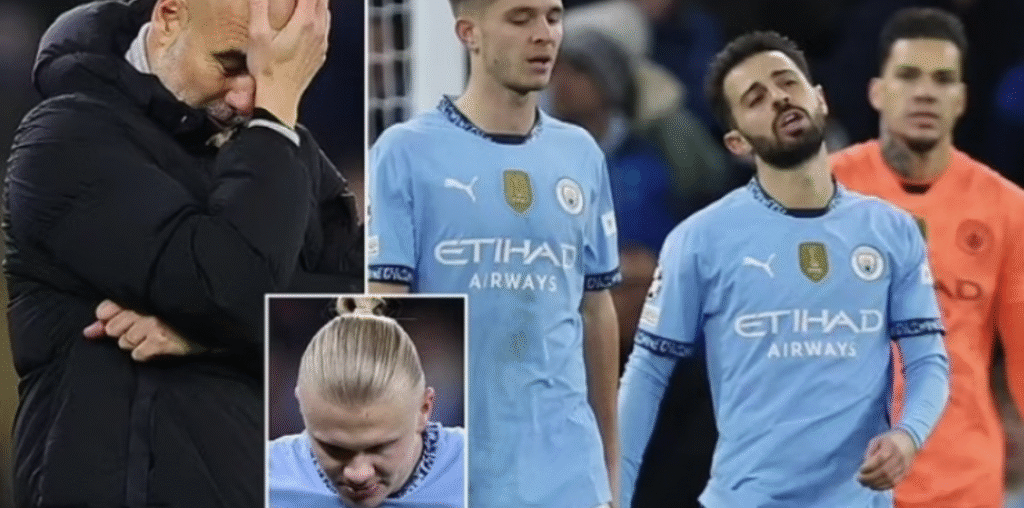
The first cracks of Man City
Following their historic treble in 2023, Manchester United entered a period expected to usher in a long-lasting era. However, reality proved far from ideal. The pace of pressing slowed, and their midfield control lacked the explosiveness it once possessed, leading to Man City they no longer dominate their equally matched opponents. The disappointing draws and defeats against teams employing counter-attacking tactics have exposed weaknesses in their transition between attacking and defensive phases.
Guardiola and the challenge of revitalizing Man City.
Pep Guardiola is the driving force behind all the success, but he also created a structure that relies heavily on the system. When opponents become too familiar with the way things work, tactical breakthroughs no longer have an element of surprise. Man City while they still have a lot of possession, the number of clear-cut chances has decreased compared to the period from 2022 to 2024.
Some experts believe Guardiola has reached his creative limit here. The feeling of complacency after winning titles sometimes diminishes team motivation, although this isn’t easily visible in every match. In a football landscape that changes every month, re-energizing the team is crucial. Man City it’s an extremely difficult task, even for the world’s top strategists.
The next generation is not yet mature enough.
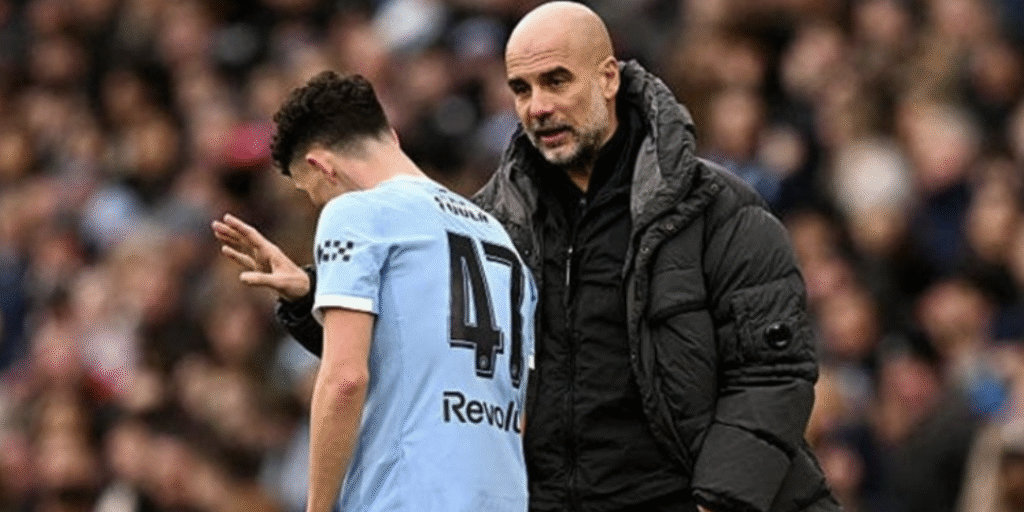
The young players are still inexperienced.
The rejuvenation process has been implemented, but the experience gap still exists. Young talents have great potential, but achieving a consistently high level of performance across multiple fronts is another story. When veterans no longer maintain peak performance, the pressure on the next generation grows increasingly intense.
Inconsistency at crucial moments causes the team to drop important points. This creates a psychological loop where confidence is no longer absolute. In the fiercely competitive environment of the Premier League, even a slight misstep can lead to being overtaken.
Pressure from expectations and a competitive environment.
The Premier League is becoming increasingly competitive with the rise of many new forces. Teams are investing heavily and are willing to play an attacking style instead of defensively. This makes the journey to defend the title more tiring than ever.
Alongside professional pressure comes media pressure. Every misstep is meticulously analyzed, creating a tense atmosphere. When peak performance becomes the default standard, any setback is seen as a sign of decline.
It’s time for change to maintain greatness.
Should we change it or keep it as it is?
Looking at the cycles of success of football empires, making changes at the right time is sometimes the way to preserve a legacy. This decision is not simply based on one season’s performance, but on a long-term vision. Man City with a strong financial foundation, a well-structured training system, and a professional operational apparatus, it is well-equipped to adapt to a new era.
Historically, many big clubs have chosen to part ways with their managers while still at the peak of their careers, in order to avoid a freefall. Guardiola dedicated nearly a decade, bringing in numerous domestic and European titles. But if the inspiration is no longer there, a glorious departure could be the ideal scenario for both sides.
From a tactical perspective, a new manager could bring a more flexible approach, optimizing the use of young talent. Man City there is a need for more versatility in attack, along with the ability to adapt quickly to various defensive systems. This change does not negate Guardiola’s contributions, but is a natural progression in the evolution of football.
Besides, Man City a fresh impetus is also needed. After years of intense competition, the emergence of a different voice could reactivate the competitive spirit. Experts on keonhacai suggest that 2026 or 2027 would be a suitable time for the transition, as the current foundation is still sufficiently solid.
However, the decision was not easy. Guardiola remains a rare tactical genius who understands the structure. Man City down to the smallest detail. If he continues, he must undertake a radical reconstruction, accepting self-transformation to keep up with trends. If he passes away, his legacy will become the benchmark for his successor.
Summary
Journey of Man City, Guardiola’s era was a rare success story in modern football, but every dynasty has its end. Considering change doesn’t mean denying the past, but rather ensuring a more sustainable future. When expectations are always at 100%, every strategic decision needs to be carefully considered. Fans can find more in-depth insights at keo nha cai 365, where the latest developments are constantly updated. Whether Guardiola stays or leaves, what matters is that the identity and desire to win must continue to be preserved.