
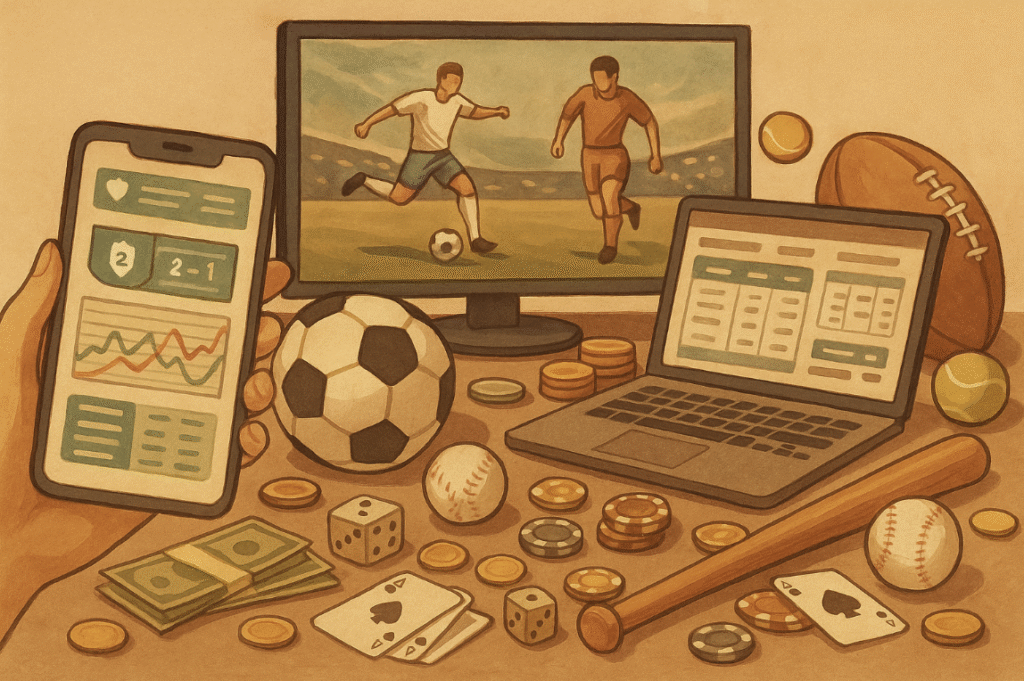
Football prediction once lived in notebooks and pub conversations. Long ago, bettors relied on team gossip and printed tables to guess results. By the late twentieth century, analysts began using statistics, turning chance into measurable probability. What started as intuition became calculation, built on observation and experience.
Modern platforms make this process visible to everyone. Players who sign up at 1xbet now see tools once used only by professionals. They follow live stats, line-up news, and goal probability indexes within seconds. The market no longer depends on rumours; it reacts to data that updates faster than any commentator can speak.
These new models do not replace human judgement. They simply shape it. Numbers give structure to what fans have known for decades – that football hides patterns beneath emotion.
How modern prediction evolved
Half a century ago, academic studies tested simple equations to estimate goal counts. Those early experiments created the base for today’s football modelling. Gradually, computers replaced paper charts. What used to take hours now happens in moments. Analysts use player-tracking data, injury metrics, and weather conditions to measure performance with surprising detail.
The method keeps growing. Data no longer comes only from matches. Training sessions, travel distance, and team fatigue all feed the model. Algorithms detect rhythm shifts that human observers might miss. Yet, sport remains unpredictable, and that unpredictability keeps betting alive.
Data layers that shape current models
Every model needs input. In football prediction, information comes from both sport and environment. The most useful layers include:
- Match history and head-to-head records
- Tactical formations and line-up changes
- Fatigue, travel, and weather influence
- Set-piece efficiency and scoring patterns
When combined, these elements reveal tendencies that help explain why odds move before kick-off. A pattern might last a few matches or an entire season. Reading it correctly means knowing when data still reflects reality and when it no longer does.
How data connects to betting
Predictive modelling links directly with how odds are made. Bookmakers use their internal formulas, but public data keeps pressure on accuracy. The interaction between bettors and bookmakers is a win-win strategy for both sides.
At the same time, online sports betting changed how people interpret probability. What was once passive entertainment became analytical comparison. The player is not only betting but measuring, watching how numbers align with what happens on the pitch.
Learning systems and constant adjustment
Machine learning now takes prediction beyond simple probability. These systems review past results, identify repeated outcomes, and adjust weighting for the next event. Each update makes the model more precise but never perfect. Football always leaves space for surprise – a red card, a deflection, a goalkeeper’s error.
Most adaptive systems work in cycles:
- They collect live and historical data
- They train themselves to recognise recurring events
- They readjust weights for future forecasts
Over time, the system becomes a living record of football logic. Yet even the best algorithm still needs human context to make sense of what it sees.
Changing habits and regional growth
Football modelling now extends into emerging markets where digital access spreads quickly. New companies specialise in real-time analytics for local leagues, creating employment for statisticians and developers. What was once an informal market becomes structured, measured, and taxed.
The iGaming mobile boom accelerated this shift. Bettors follow algorithms and live dashboards through phones, comparing data across several matches. That constant connection made betting faster but also more informed. The old waiting period between games has vanished; prediction has become continuous.
A look ahead
The story of predictive football modelling reflects how technology interacts with culture. Numbers once written on paper now move through servers and satellites, but the goal remains the same: to understand the rhythm of the game.
Algorithms will keep learning, but football’s nature will keep resisting total control. The dialogue between logic and chance continues – played out across screens, data streams, and stadiums that still echo with uncertainty.